
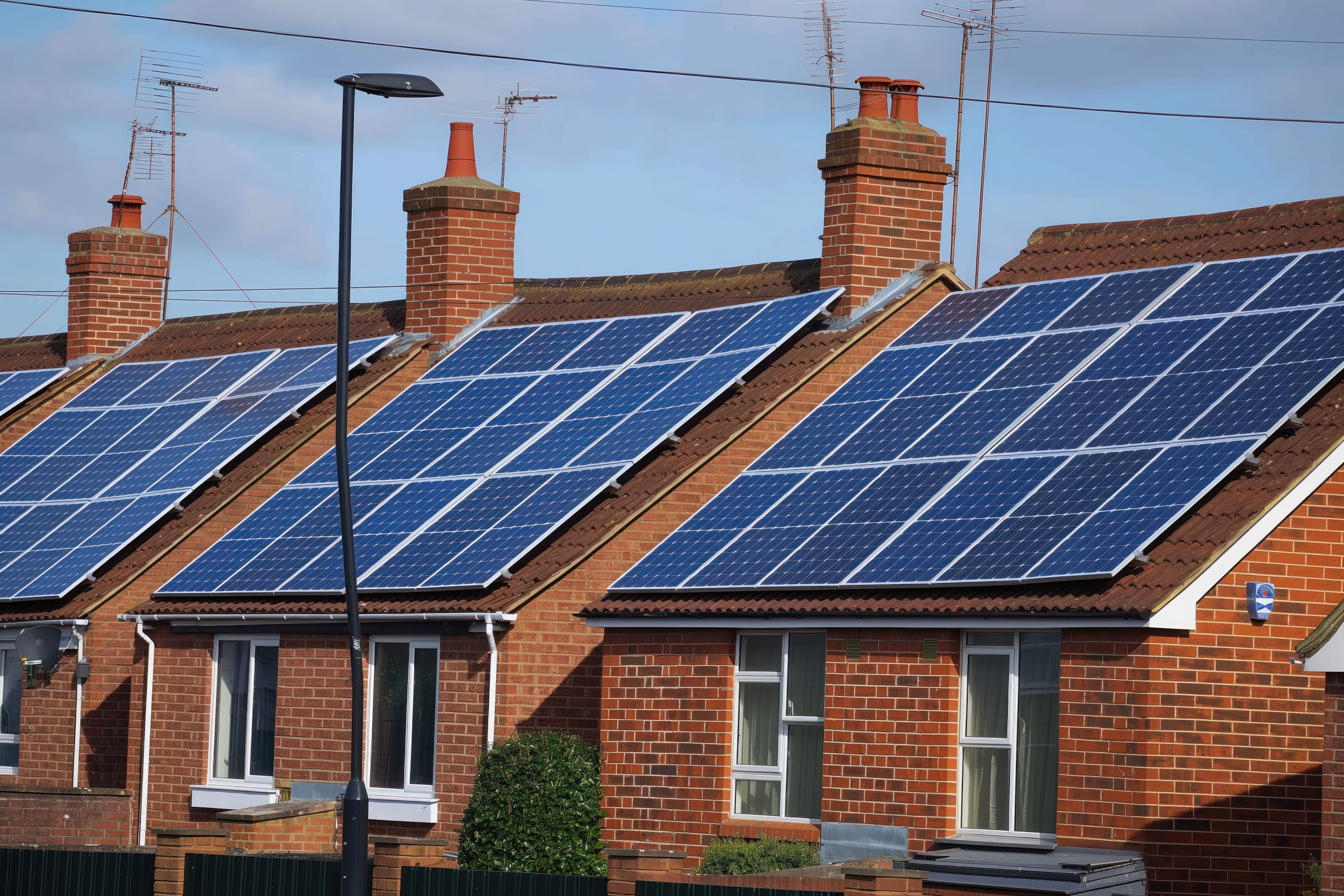
Solar quotes across Britain rarely land on the same number. A three-bedroom semi might be priced at £5,500 in one postcode and £8,000 in another, with both figures entirely legitimate. System size drives most of that gap.
Roof access, panel wattage, inverter grade and scaffolding requirements fill in the rest. With electricity sitting near 26p a unit on the standard cap, working out what solar panels cost in the UK has turned into a practical budgeting question rather than a niche one.
Here is what the 2026 market actually looks like, priced by system size and broken down line by line.
Why two similar roofs get very different quotes
Solar pricing behaves a bit like a fitted kitchen. The units look standard on the brochure, yet the finished bill depends entirely on the room they go into. A plain slate roof with easy ladder access keeps labour hours down. Older tiles, hipped roofs, three-storey terraces and awkward gables push scaffolding and fitting time upwards.
Panel choice adds another layer. Higher output modules cost more each, but fewer of them are needed, which suits smaller roofs. Add the inverter grade, the mounting kit and whether bird proofing or export limitation is included, and two quotes for the same array can sit £2,000 apart for entirely legitimate reasons.
What Do Solar Panels Cost in the UK in 2026?
Most domestic installations land between £5,000 and £11,000 fully fitted. A 3kW array, sensible for a smaller household or a limited roof, usually costs £4,500 to £6,500. The popular 4kW size for a three bedroom home sits at roughly £5,500 to £8,500, with plenty of quotes clustering near £7,000. Step up to 5kW and you are looking at £7,000 to £9,500. A 6kW system typically runs from £8,000 to £12,000.
Measured per kilowatt peak, the solar panel installation cost works out at roughly £1,400 to £1,900. Larger arrays get cheaper per unit of capacity, because the scaffolding and labour are spread across more panels.
Where the money goes on a solar quote
A quote is never just panels. Seeing the parts separately makes an inflated line much easier to spot.
- Panels: usually a third to a half of the total, depending on wattage and tier.
- Inverter: commonly £600 to £1,000, and worth checking the warranty, since it often needs replacing once in the system’s life.
- Mounting and fixings: rails, brackets and roof hooks, priced by roof type rather than panel count.
- Scaffolding and access: a few hundred pounds on a straightforward semi, considerably more on tall or tight sites.
- Labour and electrical work: the fitting team, cabling, isolators and any consumer unit upgrade.
- Certification and paperwork: MCS sign-off, building regulations notification and the grid application your installer submits.
Batteries and the extra line on your quote
Storage is the single biggest swing factor on any bill. A 5kWh unit typically adds £2,500 to £4,500, while 10kWh sits nearer £4,000 to £6,500. Pair a 4kW array with useful storage, and the total often reaches £10,000 to £14,000.
What you gain is self consumption. Without storage, roughly 40 to 50 per cent of your generation gets used at home. With it, that often climbs to 70 or 80 per cent. Payback on the battery itself is slower than on the panels, so it earns its keep mainly on a time of use tariff or in a house that sits empty through the day.
Reliefs and rules that shift the final figure
Policy quietly does a lot of work on the bottom line.
- Zero rate VAT: qualifying home installations carry 0% VAT until 31 March 2027, after which the rate is expected to return to 5%.
- Smart Export Guarantee: larger suppliers must offer an export tariff, and rates run from a token few pence to well over 20p a unit on tied deals.
- MCS certification: without it you cannot register for export payments, so treat it as a baseline, not a bonus.
- Grid notification: systems up to 3.68kW per phase are simply notified to your network operator, while larger ones need approval first.
- Planning permission: most roof-mounted arrays fall under permitted development, though listed buildings and certain conservation area positions still need consent.
- Grant routes: support is means-tested, with supplier-funded help running to the end of December 2026 and council-led schemes covering eligible low-income households.
Working out payback on your own roof
Savings hinge on how much of your own generation you actually use. A 4kW array on a reasonable roof produces somewhere near 3,400 units a year. Combine bill savings with export income and most households see £500 to £800 annually.
That puts the solar panel payback period at roughly seven to eleven years, on kit warranted to keep performing well past that point. Move laundry and dishwashing into daylight hours and the sums tighten. Add a heat pump or home car charging and they tighten again.
Bright thinking before you sign
Three quotes remain the sensible minimum, each priced per kilowatt peak so you can compare fairly. Ask every MCS certified installer for a written generation estimate, a battery option shown as a separate line, and confirmation of certification.
Anything far above £2,200 per kilowatt peak on a simple roof deserves a polite question. Knowing what solar panels cost in the UK puts you in a much stronger position once those quotes land on the kitchen table.
For more practical guidance on renewable power, home efficiency and keeping energy bills in check, browse the guides at Energy Square.